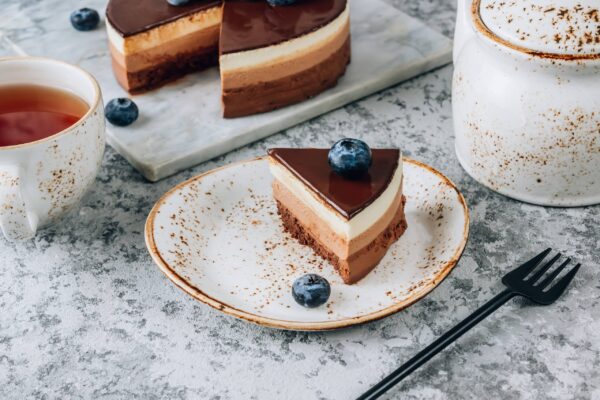
Modern pastry art is based on striking a balance between soft textures and contrasting flavors. A heart-shaped mousse cake, combining the delicacy of vanilla, the citrusy tartness of Earl Grey tea, and the bright acidity of raspberries, represents a complex, multi-layered structure. Unlike classic sponge cakes, this dessert requires strict adherence to temperature control and a precise sequence of freezing processes. Each layer here serves a specific purpose: from creating a sturdy foundation to shaping the final aesthetic appearance.
Preparing the Fruit Center: Raspberry Confit
The creation of the cake begins with forming its “core”—the raspberry confit. Using seedless berry purée helps achieve the smooth consistency required for mousse-like textures. The tartness of the raspberries will enhance the flavor, which complements the sweetness of the vanilla mousse and the complexity of the tea notes.
The confit preparation process involves briefly heating the berry purée with the addition of a gelling agent, most often pectin or gelatin. NH pectin is preferred for fruit fillings, as it ensures heat reversibility and preserves the natural color of the berries. Sugar is added to the mixture in dry form, mixed with the pectin, to prevent lumps from forming upon contact with liquid.
Once the desired consistency is achieved, the fruit mixture is distributed into molds with a smaller diameter than the main cake mold. This step is extremely important for several reasons:
- The frozen insert ensures a clean visual cross-section of the product.
- Crystallization of the filling makes it easy to handle during final assembly.
- Even distribution of flavor ensures balance in every slice of the dessert.
Extended freezing of the confit (at least 4–6 hours) ensures that the filling retains its shape upon contact with the warm mousse.
Textural Foundation: Sponge Cake and Tea Flavor
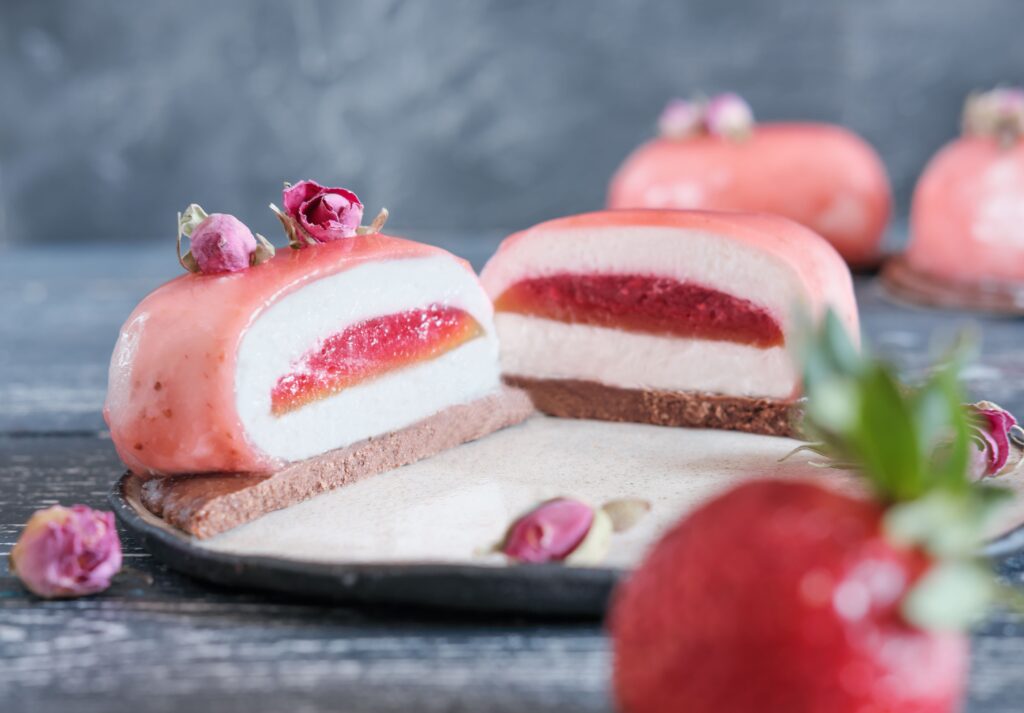
The cake’s base is a sponge cake flavored with Earl Grey tea. This particular tea was chosen for its bergamot oil, which adds a refined citrus note to the dessert. There are two ways to infuse the tea flavor into the batter: finely grinding the tea leaves directly into the flour, or steeping the tea in the liquid ingredients of the recipe, such as milk or butter.
The sponge cake must be dense enough to support the weight of the mousse and filling, yet remain tender. During baking, it is important not to overbake the dough, as a dry sponge cake can become too hard after freezing. The finished cake layer is cooled and cut to a shape corresponding to the size of the base of the future “heart.”
To enhance the culinary experience, a crispy layer (croustillant) is often applied to the surface of the sponge cake. It may consist of the following ingredients:
- Waffle crumbs for a delicate crunch.
- White chocolate as a binding agent.
- Almond or hazelnut paste for depth of flavor.
- Cocoa butter, which prevents the crispy layer from becoming soggy due to moisture from the mousse.
The crispy layer adds complexity to the texture and creates a barrier between the moist sponge cake and the light mousse, preventing moisture migration within the dessert.
How to Make Vanilla Mousse
Vanilla mousse forms the bulk of the cake and serves as its main binding element. A high-quality recipe uses natural vanilla (Bourbon or Tahitian varieties), whose seeds are visible when the cake is cut. The mousse is made with a base of crème anglaise or white chocolate, which gives it stability and a creamy texture.
The process of making the mousse requires intense concentration. First, the base is prepared – a custard or ganache – into which prepared gelatin is added. After the base has cooled to working temperature (usually 28–32 degrees Celsius), whipped cream is gently folded into it. The cream is whipped to soft peaks: cream that is too stiff will make the mousse heavy, while cream that is not whipped enough will make it runny and unstable.
Assembly Technique: The “Upside-Down” Method
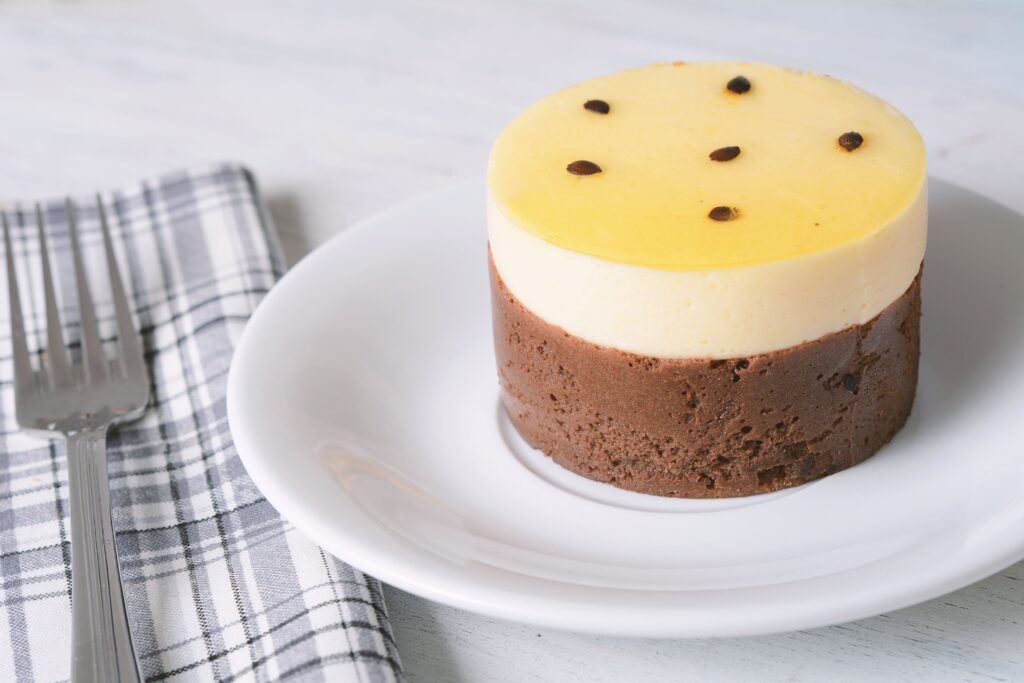
Assembling mousse cakes with complex shapes, such as a heart, is almost always done using the inverted method. This means the cake is assembled in reverse order: from the “top” to the base. This ensures a perfectly smooth surface on the top and sides, which is critical for the subsequent glazing.
First, part of the vanilla mousse is poured into a silicone mold. The mold is tapped lightly or placed on a vibrating table to release air bubbles. Then, a frozen raspberry insert is placed in the center. It is pressed lightly into the mousse so that it fills the edges. The remaining mousse is spread on top, and finally, the sponge cake with the crispy layer is placed on top. Once assembled, the cake is sent for blast freezing. The temperature inside the cake must drop to -18 or -20 degrees.
Comments are closed