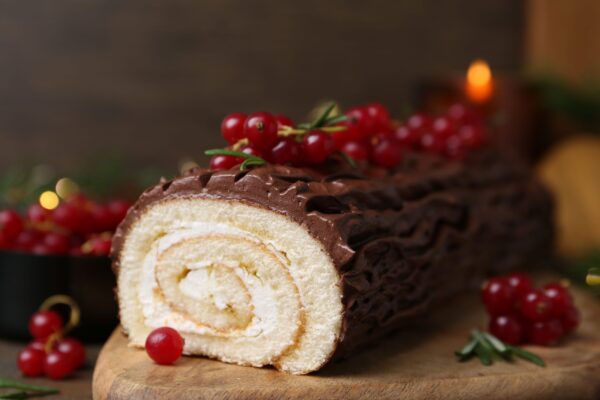
Christmas is traditionally associated with the aromas of cinnamon, chocolate, and spiced baked goods. But sometimes you want to break the mold and add some bright, sunny colors to the winter holiday. Bûche de Noël is a classic French dessert that, in this version, becomes a true gastronomic explosion. The combination of tart passion fruit, salty caramel, and crunchy peanuts creates a balance that will impress any foodie.
Preparing such a complex dessert requires time and special inspiration. It’s not just a cake, but a multi-layered architectural structure where each element evokes its own emotion. The tartness of the tropical fruit instantly refreshes the palate after a hearty dinner, while the caramel notes provide a sense of comfort.
Step 1: Preparing the Passion Fruit Cream
Preparing the filling is the first step, because the core of the dessert must undergo a full crystallization cycle in the freezer. Using natural passion fruit purée ensures the necessary pH level, which balances the sweetness of the subsequent layers.
The process is based on the technique for making custard, where the puree is mixed with egg mixture and sugar, then pasteurized in a double boiler until thickened. An important aspect is stabilizing the emulsion with butter: it is added at a temperature of about 40–45 degrees, which allows for a uniform, smooth texture without separation.
After emulsification, the cream is piped into narrow molds. Freezing until firm is a critical step for the final assembly, because it prevents the layers from deforming under the weight of the mousse.
Step 2: The Caramel Layer and Peanuts
In this recipe, the caramel serves as the link between the exotic fruit and the nutty base. The sugar is caramelized using the dry method until it reaches a deep amber hue. This gives the dessert a characteristic aroma of burnt sugar, which perfectly complements the roasted peanuts.
To create the crunchy layer, confectionery praline and chopped peanuts are used. This step involves making a croustillant – a mixture that retains its texture even after prolonged exposure to the mousse.
The main requirements for preparing the nut layer include:
- Even roasting of the peanuts to release essential oils.
- Use of dessert wafer crumbs (pailleté feuilletine) to create a delicate crunch.
- Tempering the chocolate or cocoa butter in the mixture to create a moisture-proof barrier.
Thanks to these measures, the crunchy layer remains an active component, creating the necessary contrast with the delicate mousse and sponge cake.
Step 3: Dessert Assembly and Mousse Base
The sponge cake for the Yule log should be thin and springy. It serves as a base that stabilizes the dessert after thawing. It is baked at a high temperature for a short time to retain the dough’s moisture.
The main body of the dessert is filled with caramel mousse, made from whipped cream and caramelized white chocolate. The technique requires carefully incorporating the airy mixture into the chocolate base at a strictly defined temperature (around 30 degrees) so that the mousse does not lose its lightness and does not begin to set prematurely.
Assembly process for the dessert using the inversion method (upside-down assembly):
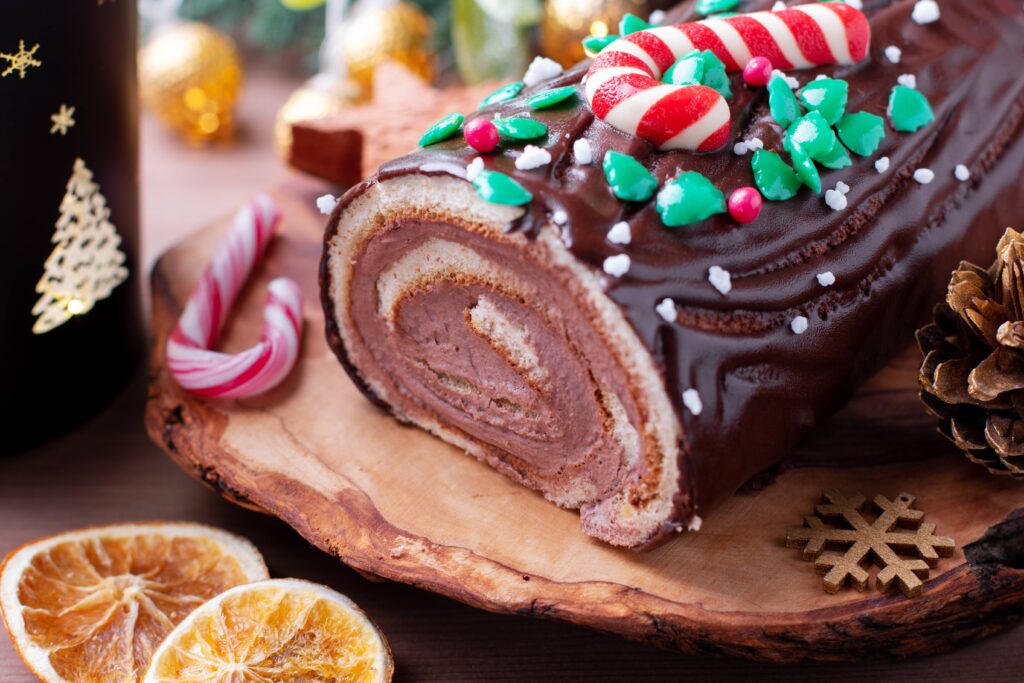
- The mold is partially filled with mousse.
- The frozen passion fruit cream is centered.
- The final layer of mousse is added.
- The structure is topped with a crisp layer and sponge cake.
A full freezing cycle (at least 12 hours) is required to ensure the dessert’s surface is perfectly smooth before applying the glaze.
Final Finishing and Mirror Glaze
The dessert is finished with a mirror glaze (glace miroir). This coating, made from gelatin, sugar, and glucose syrup, provides a glossy sheen and protects the mousse from drying out. The working temperature of the glaze is typically 30–35 degrees, depending on its composition.
The glaze is applied to the dessert immediately after it is removed from the freezer. The sudden temperature change allows the gelatin to set instantly, forming an even coating. After the excess glaze has dripped off, the dessert is transferred to a base for further decoration.
To visually highlight the dessert’s composition, elements such as fresh passion fruit or its seeds, caramelized peanut kernels, and thin sheets of tempered chocolate are used. This approach to decoration allows the consumer to intuitively understand the product’s flavor profile even before tasting it.
Comments are closed